If you've ever tried to build a Raspberry Pi project with a friend or a full team, you know the frustration: code gets lost, versions conflict, and nobody can tell which wire diagram matches which firmware. An open source maker codes Raspberry Pi collaboration platform solves exactly this problem. It gives makers, educators, and hobbyist engineers a shared space to store, version, and co-develop Raspberry Pi project code openly and without cost.
This matters because Raspberry Pi projects are rarely solo work anymore. Robotics clubs, university labs, and community hackerspaces all need ways to share working code, track changes, and let new contributors jump in without breaking what already works.
What does an open source maker codes Raspberry Pi collaboration platform actually mean?
Let's break it apart. Open source means the code is publicly available and licensed for others to use, modify, and redistribute. Maker codes refers to the firmware, scripts, and software modules that makers write for physical computing projects things like sensor readers, motor controllers, and GPIO pin handlers. Raspberry Pi is the small, affordable single-board computer that powers many of these builds. And a collaboration platform is the tool or service (like GitHub, GitLab, or Gitea) where all of this code lives and where multiple people can work on it together.
Put together, the phrase describes a workflow: write open code for Raspberry Pi hardware, host it on a platform where others can contribute, and keep everything organized with version control.
Why would someone look for this specific setup?
There are a few common reasons people search for this combination:
- They're starting a group Raspberry Pi project and need a shared codebase that tracks who changed what.
- They want to publish their maker project openly so others can learn from it, fork it, or improve it.
- They're educators running a class or workshop where students submit Raspberry Pi code assignments through a shared repository.
- They're contributing to an existing open source robotics or IoT project and need to understand the collaboration workflow.
In all these cases, the goal is the same: make it easy for multiple people to write, review, and merge Raspberry Pi project code without chaos.
What platforms work best for Raspberry Pi maker collaboration?
The most common choices are GitHub, GitLab, and self-hosted options like Gitea. Each has strengths depending on your needs.
GitHub is the largest open source code hosting platform. Most Raspberry Pi maker projects live here because it has the biggest community, built-in issue tracking, and pull request workflows that make code review straightforward. If you're looking to get started with robotics-specific repositories, our guide on setting up a maker codes GitHub repository for robotics projects walks through the setup process step by step.
GitLab offers similar features but includes a built-in CI/CD pipeline, which is useful if you want to automatically test your Raspberry Pi code every time someone pushes a change. For beginners who want to try this route, we cover how to host maker codes on GitLab for beginners in detail.
Self-hosted platforms like Gitea give you full control. Some makers prefer this for privacy reasons or because they're building a local hackerspace network where all code stays on-site.
How does version control help Raspberry Pi projects specifically?
Raspberry Pi projects mix software and hardware. You might have Python scripts controlling GPIO pins, shell scripts managing boot sequences, configuration files for sensors, and documentation all in one folder. Without version control, one overwritten file can take hours to recover.
Git-based collaboration platforms let you:
- Track every change to your codebase with timestamps and author information.
- Branch your work so you can experiment with new sensor code without affecting the stable version.
- Merge contributions from other makers after review.
- Roll back mistakes if a code change breaks your physical setup.
If you're new to this workflow, our article on repository best practices for version control covers the habits that keep maker projects clean and manageable.
What are real examples of this in practice?
Here are a few scenarios where maker codes and Raspberry Pi collaboration come together:
- Pi-based weather station at a school. Three students write Python code to read temperature and humidity sensors. They push their scripts to a shared GitHub repo, use branches for each sensor module, and merge into a main branch that runs on the classroom Raspberry Pi every morning.
- Open source robot arm project. A maker publishes their servo control code on GitHub with an MIT license. Contributors from different countries submit improvements better calibration scripts, support for new servo models, and documentation fixes. The Raspberry Pi runs the control software, and everyone benefits from shared work.
- Home automation system. A couple builds a Raspberry Pi-based home hub. They use GitLab to store their Node-RED flows, custom Python integrations, and hardware configuration files. When they add a new smart device, they create a branch, test it on the Pi, and merge it when it works.
What mistakes do people make when setting this up?
There are a few common pitfalls:
- Not using a
.gitignorefile. Raspberry Pi projects often generate temporary files, log files, and compiled bytecode. Without a proper.gitignore, your repository fills up with junk that makes it harder for others to understand your actual code. - Committing credentials or API keys. This is especially common in IoT projects where your code connects to cloud services. Once a key is in your Git history, it's there even if you delete it later.
- No README or wiring documentation. Other makers can't reproduce your project if they don't know which GPIO pins connect to which components. A good README with a pinout diagram saves everyone time.
- Mixing hardware-specific paths with generic code. If your script hardcodes
/home/pi/sensors/instead of using relative paths, it won't work for anyone who clones your repo to a different setup.
How can you make your Raspberry Pi maker code easier to collaborate on?
A few practical tips that experienced makers follow:
- Write clear commit messages. Instead of "fixed stuff," write "fixed DHT22 sensor read timing on GPIO pin 4." Future you and future contributors will thank you.
- Use a consistent project structure. Put scripts in a
src/folder, diagrams indocs/, and configuration inconfig/. This helps collaborators find what they need quickly. - Include a requirements file. If your Python code needs specific libraries like
RPi.GPIOoradafruit-circuitpython-dht, list them in arequirements.txtso others can install dependencies with one command. - Tag releases. When your project reaches a working milestone, tag it in Git. This gives collaborators a known-good version to start from.
- Use issues and pull requests. These built-in collaboration tools are the real power of platforms like GitHub and GitLab. Track bugs, suggest features, and review code changes before they land in your main branch.
Good typography matters too when you're writing documentation for your project. Clean, readable fonts make your README files and docs easier to follow. A monospace option like Fira Code works well for inline code samples in your project documentation.
What should you do next if you want to start?
Here's a quick checklist to get your Raspberry Pi maker project onto a collaboration platform today:
- Pick your platform. GitHub for the biggest community, GitLab for built-in CI/CD, or Gitea for self-hosting.
- Create a new repository with a clear name that describes your project (for example,
raspberry-pi-weather-station). - Add a
.gitignorefile tailored to Python and Raspberry Pi projects. - Write a
README.mdthat explains what the project does, what hardware you need, and how to run the code. - Push your first commit with your working code and basic documentation.
- Share the repository link with your collaborators and invite them to fork or join.
- Set up branch protection on your main branch so changes go through pull requests and review before merging.
Start small. Even a single Python script and a wiring diagram is enough to get going. The value of a collaboration platform grows with every commit, every issue, and every contributor who joins your project. The sooner you set up the repo, the sooner your Raspberry Pi maker project becomes something others can build on.
 Maker Codes Github Repository for Robotics Projects
 Beginner's Guide to Hosting Maker Codes on Gitlab
 Arduino Maker Codes Npm Library for Embedded Systems Projects
 Maker Codes Repository Best Practices for Version Control Guide
 How to Create Qr Code Projects Using Maker Codes: a Step-by-Step Guide
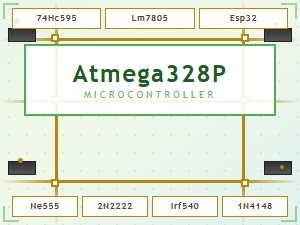 Common Maker Codes for Circuit Board Components Explained