If you've ever stared at a blank Arduino IDE window wondering how to turn your idea into a working circuit, you're not alone. Maker codes Arduino coding examples give you that critical starting point real, working snippets you can study, modify, and build with. Instead of guessing at syntax or wiring, you follow proven patterns that real makers have already tested. That shortcut saves hours of frustration and helps you actually finish projects.
What Exactly Are Maker Codes Arduino Coding Examples?
Maker codes Arduino coding examples are pre-written code snippets and full sketches designed specifically for Arduino boards. They cover everything from blinking an LED to reading sensors, driving motors, and connecting to Wi-Fi. Each example typically includes the code itself, a wiring diagram, and a plain-English explanation of what each line does.
Think of them as recipes. You wouldn't bake a cake without a recipe the first time these examples work the same way for electronics and programming. You read through the code, understand the logic, then adapt it to fit your own project.
These examples draw from core programming fundamentals like variables, loops, and conditionals, but applied directly to physical hardware.
Why Do Makers Search for Arduino Coding Examples?
Most makers look for working code examples because they want to move fast. Whether you're building a school project, prototyping a product idea, or just tinkering on a weekend, having a reference sketch cuts your development time significantly.
Common reasons people search for these examples include:
- Learning a new sensor or module You bought a temperature sensor, ultrasonic rangefinder, or servo motor and need to know how to wire and code it.
- Troubleshooting broken code Something isn't working, and you need to compare your sketch against a known-good example.
- Building a specific project You have a goal (like a smart plant watering system) and want proven code to start from.
- Understanding Arduino syntax Reading real examples is one of the fastest ways to learn how C/C++ works on the Arduino platform.
You can also connect with an online community of makers who share their working examples and help debug yours.
Where Can You Find Reliable Arduino Code Examples?
Not all code you find online actually works. Here are the most trustworthy sources:
- Arduino IDE Built-in Examples Open the Arduino IDE, click File → Examples, and you'll find dozens of tested sketches organized by category. These are maintained by the Arduino team and work out of the box.
- Arduino Official Reference The Arduino Language Reference includes code snippets for every built-in function.
- Community forums and maker blogs Sites like the Arduino Forum, Instructables, and Hackster.io host thousands of user-submitted projects with full code.
- GitHub repositories Many libraries include example folders with working sketches you can load directly.
When picking a font for your project documentation or label design say you're creating a professional-looking project poster a clean monospace typeface like Monolisa works well for displaying code clearly.
What Are the Most Common Arduino Coding Examples Makers Start With?
Every Arduino maker begins with a handful of foundational examples. These aren't just beginner exercises they teach core patterns you'll reuse in almost every project.
Blinking an LED
The "Hello World" of Arduino. You set a digital pin as an output, then toggle it HIGH and LOW inside a loop with a delay. It teaches you about pinMode(), digitalWrite(), and delay().
Reading an Analog Sensor
Connect a potentiometer or light-dependent resistor to an analog pin, then read its value with analogRead(). This example shows how Arduino converts a 0–5V signal into a number between 0 and 1023.
Serial Monitor Output
Using Serial.begin() and Serial.println(), you can send data from your Arduino to your computer screen. This is your primary debugging tool and one of the first things you should learn.
Button Input with Debouncing
Reading a button seems simple, but mechanical switches bounce they send multiple signals per press. A debounce example teaches you how to filter out that noise using timing logic.
Driving a Servo Motor
The Servo.h library makes this straightforward. You attach a servo to a pin and move it to specific angles. This pattern shows up in robotic arms, pan-tilt camera mounts, and automated doors.
These building blocks connect directly to starter IoT projects where you combine sensors, actuators, and network connectivity.
How Do You Adapt an Arduino Example to Your Own Project?
Copying code is fine understanding it and modifying it is where real learning happens. Here's a practical approach:
- Read every comment. Good examples include comments explaining what each block does. Don't skip them.
- Change one thing at a time. Modify the delay value, swap the pin number, or change an LED color. See what breaks and what improves.
- Add new features gradually. Got the basic blink working? Now add a second LED. Then add a button to control it. Build in layers.
- Match your hardware. Make sure the example's wiring matches your specific board and components. An example for an Uno may need adjustments for an ESP32 or Nano.
What Common Mistakes Should You Avoid?
Even with working examples in hand, makers run into predictable problems. Watch out for these:
- Wrong board selected in the IDE. If your code compiles but won't upload, check Tools → Board. Selecting "Arduino Uno" when you have a Nano Every will cause upload failures.
- Using outdated libraries. Library APIs change over time. An example written in 2018 might use deprecated functions. Always check the latest library documentation.
- Skipping the wiring diagram. Code without correct wiring is useless. Always match your physical circuit to the example before uploading.
- Ignoring voltage levels. Connecting a 5V sensor to a 3.3V board (like many ESP8266 boards) can damage your hardware. Check voltage requirements first.
- Not reading compiler errors. When something won't compile, the red text at the bottom of the IDE usually tells you exactly which line has the problem. Read it instead of guessing.
How Can You Organize Your Growing Collection of Examples?
After a few months of maker work, you'll have dozens of sketches scattered across your computer. A few habits keep things manageable:
- Use a consistent folder structure. Organize by project type: sensors, motors, communication, displays.
- Rename files clearly. "Ultrasonic_HC-SR04_Distance_cm.ino" is far more useful than "sketch_feb23.ino."
- Comment your modifications. When you change an example, add a comment explaining why. Future-you will thank past-you.
- Keep a project log. A simple text file or spreadsheet tracking what each sketch does, which board it targets, and what library version it needs saves significant time later.
Practical Checklist: Working with Arduino Coding Examples
Here's a step-by-step checklist you can follow every time you use an Arduino code example:
- Verify the source. Is the example from a trusted source with active community feedback?
- Check hardware compatibility. Does the example match your board model and component versions?
- Install required libraries. Open Library Manager and make sure every
#includein the sketch has its library installed and updated. - Select the correct board and port. Tools → Board and Tools → Port must match your physical hardware.
- Wire the circuit before uploading. Follow the diagram exactly. Double-check power and ground connections.
- Upload and test. Open Serial Monitor at the correct baud rate. Verify the basic behavior works.
- Modify one variable at a time. Change one thing, test, commit the change, then move to the next.
- Document your changes. Add comments and save a working version before making risky edits.
Quick tip: Build a personal "starter library" of your five most-used example sketches LED control, sensor reading, serial output, motor driving, and Wi-Fi connection. Having these ready means you spend less time searching and more time building.
 Maker Codes: Programming Fundamentals for Beginners Guide
 Robotics Programming Challenges for Beginner Makers
 Online Community Support for Beginner Programmers and Makers
 Iot Starter Projects Using Maker Codes
 How to Create Qr Code Projects Using Maker Codes: a Step-by-Step Guide
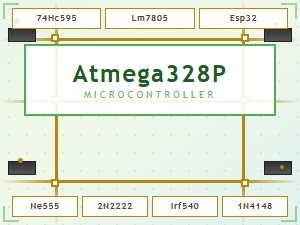 Common Maker Codes for Circuit Board Components Explained